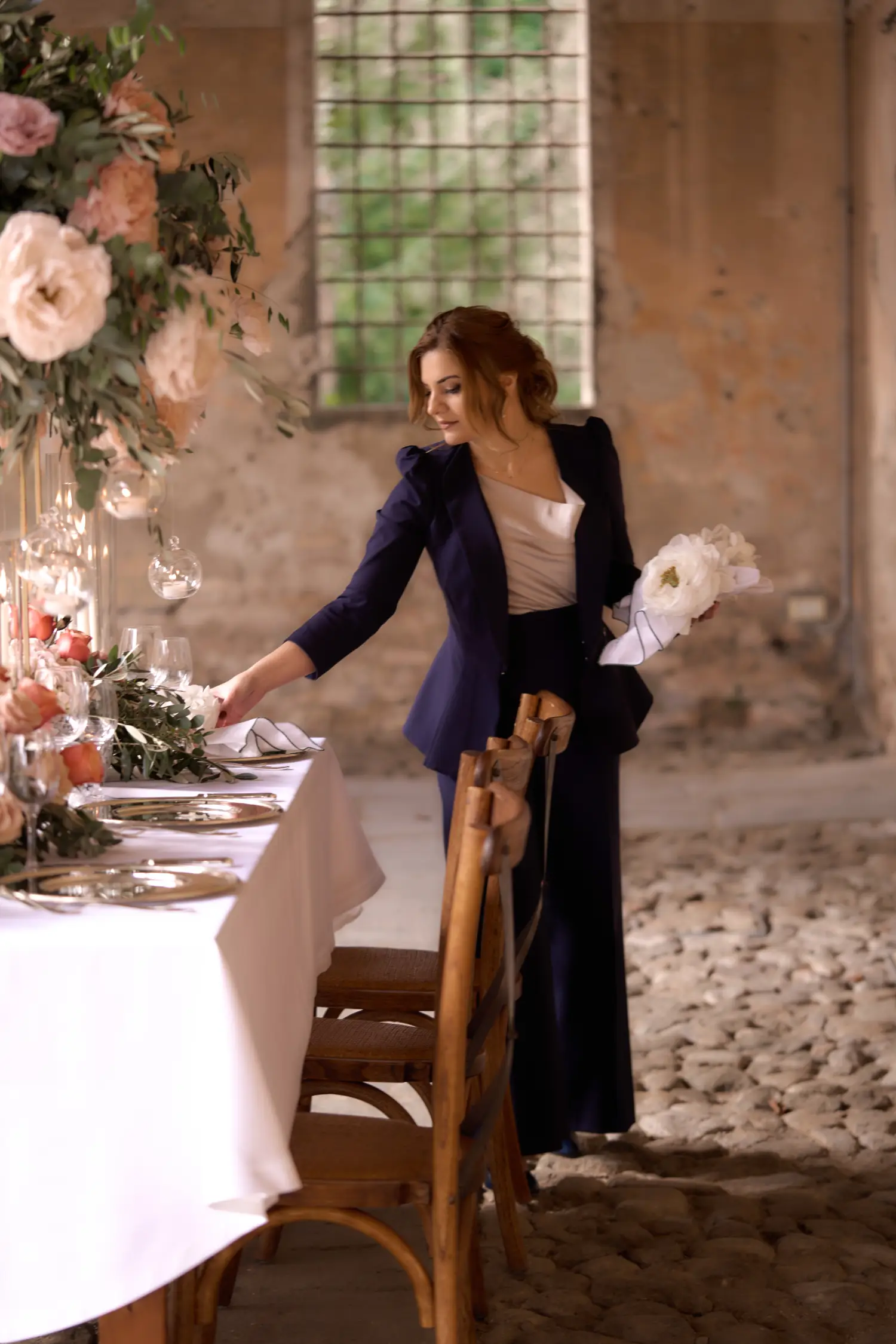
There's a specific moment I still think about from a site visit a few years ago. I was at a beautiful villa — garden with a view of the lake, late afternoon light in May doing impossible things to the stone columns. The couple was already in love with the place, you could tell. And while the venue manager was showing us the terrace, I was already thinking about something else: where the external catering generator would be unloaded, whether the municipality required outdoor music to stop at eleven or midnight, and whether that side ramp could take the weight of a supplier's truck.
I'm not saying this to sound like the person who ruins the mood. I'm saying it because that villa was genuinely beautiful, and the only way to give it back to the couple exactly as they'd imagined it was for me to ask the uncomfortable questions first — while there was still time to find the answers.
That list of questions, built up over the years, is what you'll find below.
What I'm actually looking for at a site visit
When I visit a venue I'm not just looking at whether it's beautiful. I'm trying to understand whether it can hold the weight of an entire day. Every venue has a story it tells well and one it tells less willingly. My job is to get it to tell both, in the same afternoon, before you sign anything.
I always ask the questions below in order — not because there's a canonical sequence, but because they follow a precise logic: first I understand the container, then the constraints, then the costs, then everything that happens when things get complicated.
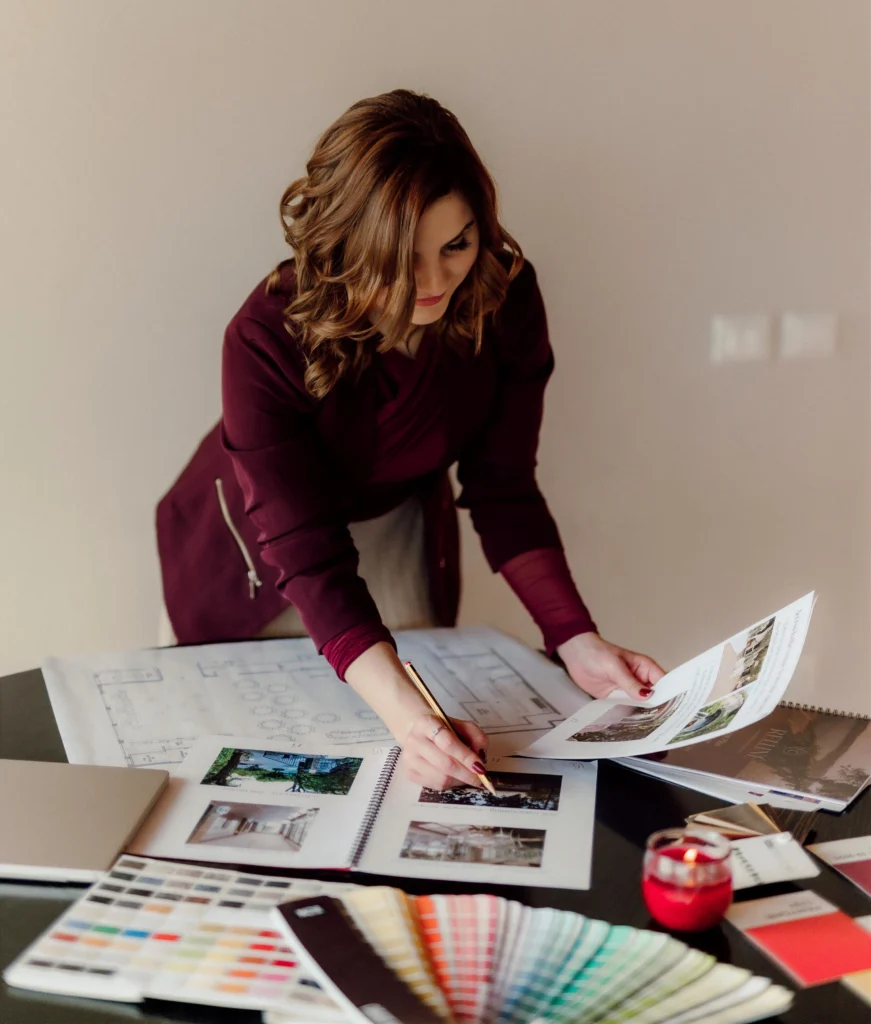
The complete checklist
Basic venue information
The venue's full name, website and email address, the exact address, and the name and direct phone number of the contact I'll be working with over the coming months. Not the sales manager. The operational contact. The one who picks up on a Saturday morning when it matters.
Dates and availability
Which dates are still available for the year we're interested in, and what are the event hours. This includes the time the venue opens for suppliers, often different from the guests' arrival time, and the deadline by which everything must be cleared the following day.
Capacity
Maximum number of guests seated at table and maximum for a standing cocktail reception. These are often two different numbers, and the difference can change the shape of the entire day.
Venue costs
The venue hire fee on its own, separate from everything else. Are tables, chairs and linen included, or are they extra? Is the ballroom included? These three elements, if not clarified upfront, always show up on the final invoice.
Catering: where half the budget hides
This section deserves its own space, because it's where I've seen more budgets blow than anywhere else.
The first thing to establish is the catering structure: does the venue work with an in-house exclusive caterer, require a specific external supplier, or allow free choice? The three options have completely different implications, both on price and logistics.
If external catering is allowed, I always ask for indicative costs for a seated lunch, a buffet lunch, a seated dinner and a buffet dinner. These are rough figures, not final quotes, but they tell me whether we're in the same ballpark. I always add two questions most people forget: the cost of the sommelier service, and the cost of cutting a cake brought in from outside. That second one, in particular, can come as a surprise.
I also ask about the server-to-guest ratio. The benchmark I use is one server per ten guests for a seated dinner. Below that threshold, you feel it.
If external catering is permitted, I ask whether professional kitchens are available for the suppliers and where they are in relation to the dining room. A kitchen on the wrong floor, with a single service staircase, can become a real operational problem.
What the venue doesn't mention in the brochure
This is the part of the site visit where I deliberately slow down.
Music. Are there restrictions on hours or decibel levels? Are there local council ordinances requiring outdoor music to stop before midnight? Has the venue ever had issues with neighbours — and if so, how were they resolved?
Alcohol. Are there restrictions on serving, on the types of drinks allowed, or on hours?
Rice and petals. Many venues prohibit throwing rice (for cleanliness or bird safety reasons), and some also prohibit fresh petals on historic floors. Better to know before the bride has already pictured that specific moment.
Decorations. What decorative structures are already available, what can be brought in from outside, and what is strictly forbidden, open-flame candles on historic floors, fixtures attached to walls, fireworks.
The logistics you can only see in person
A room for the couple. Is there a dedicated space where the bride can finish getting ready, or where both of you can step away for a moment during the day? This isn't a luxury. It's an operational necessity.
Accessibility. Are there access points for guests with reduced mobility? This also concerns suppliers with heavy equipment.
Parking. How many spaces are available and whether there's a cost. For a wedding of 80 people at a country villa with no dedicated parking, a shuttle plan is needed. The sooner I know, the sooner I can organise it.
Accommodation. If the venue has rooms, how much do they cost for the couple and for guests, and how many are available on site.
The questions about what comes after: guarantees and cancellations
Cancellation policy. What does the contract provide if the event is cancelled, postponed or scaled down due to external circumstances? What's refundable and what isn't, and by which deadlines?
I always ask this one calmly, as if it were a formality — because for most couples, it is. But having the answer in writing in the contract is worth more than any verbal reassurance.
Complimentary perks for the couple. Some venues include small benefits — a complimentary wedding night stay, a bottle of vintage wine. It's not the most important question, but it's worth asking.
What I always add, beyond the list
At every site visit, there are things you don't ask, you observe. The care with which the venue manager answers the uncomfortable questions. How long it takes to get a reply by email. The condition of the corners they don't show you on the guided tour.
A venue that works well with suppliers shows it in how it talks about them. One that has handled complex weddings before shows it in how precise it is about its restrictions, not in how vague it is.
I'm not writing this to worry anyone. I'm writing it because having this list in hand when you visit a venue means asking the right questions at the right time. And the answers you get will already tell you a great deal about how your wedding day will go.
If you'd rather let me handle it
The first thing we do together is a discovery call, free of charge. It's not a sales meeting. It's a quiet space to understand where you are, what you're looking for, and whether working together makes sense.
Before the call, I'll ask you to fill in a short questionnaire. Not a bureaucratic form — it's how I begin to understand who you are, what matters to you, and how you picture that day. If you're still in the early stages of planning, I'll use your answers to prepare a realistic, personalised budget analysis. Not a generic estimate: a concrete picture of your vision in numbers — how many guests, what kind of atmosphere, which priorities, and what it truly costs to make it happen in Italy.
The goal is for you to arrive at your wedding day knowing everything is exactly as you imagined it. And to spend that day actually living it, without a single thing to worry about.